
From April 10 to 13, the "2026 10th National Conference on Magnetic Materials and Devices" was successfully held in Hangzhou, Zhejiang Province. The conference was jointly organized by the National Conference Organizing Committee on Magnetic Materials and Devices and the Expert Committee on Magnetic Materials and Devices, and co-hosted by the College of Mathematics and Physics of Beijing University of Chemical Technology, the College of Materials Science and Engineering of Zhejiang University of Technology, and other institutions. Professor Wang Wei, Dean of the College of Mathematics and Physics of Beijing University of Chemical Technology, served as the chair of the sub-forum on "Magnetoelectric Functional Materials".
Under the theme "Innovation-Driven Development: Exploring the Path of Materials and Devices," the conference featured sub-forums covering fundamental research and applications of magnetism and magnetic materials, spintronics and topological magnetism, microwave materials, magnetoelectric functional materials, permanent magnets and permanent magnet motors, soft magnetic materials, biomagnetism and magnetic nanomaterials, as well as magnetic techniques and applications. It established a platform for in-depth integration of industry, academia, and research. More than 360 experts, scholars, faculty, students, and corporate R&D personnel from over 100 renowned domestic and international universities, research institutions such as the Chinese Academy of Sciences, and high-tech enterprises attended the conference, engaging in deep exchanges on the latest research achievements and contributing to scientific innovation and industrial upgrading in China's magnetic materials field.
On the morning of April 11, the conference officially opened. The opening ceremony was presided over by Professor Che Shenglei, Chairman of the conference and Director of the Institute of Magnetoelectric Functional Materials at Zhejiang University of Technology. Academician Du Youwei of Nanjing University and Professor Che Shenglei delivered opening speeches, warmly welcoming all participating experts and scholars.
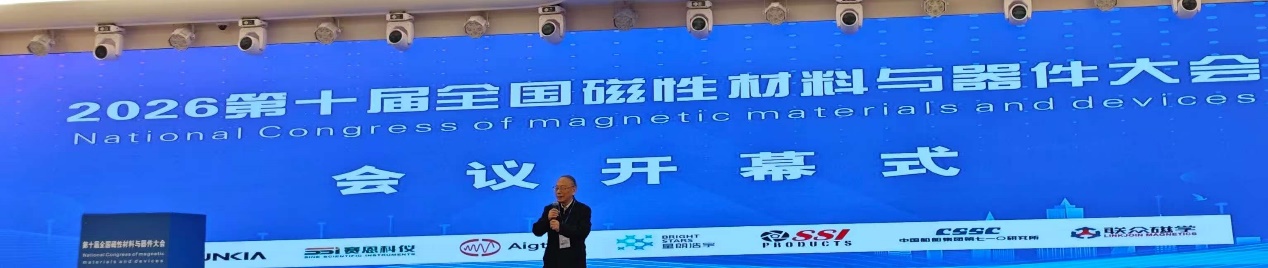
Figure1. Academician Dou Youwei delivering a speech
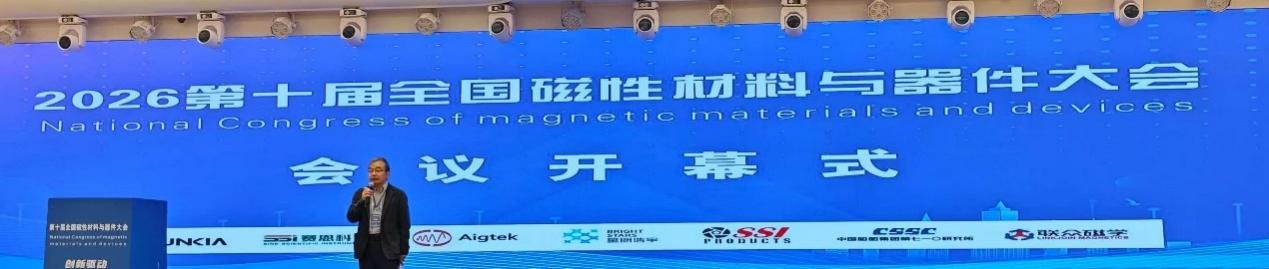
Figure2. Professor Che Shenglei delivering a speech
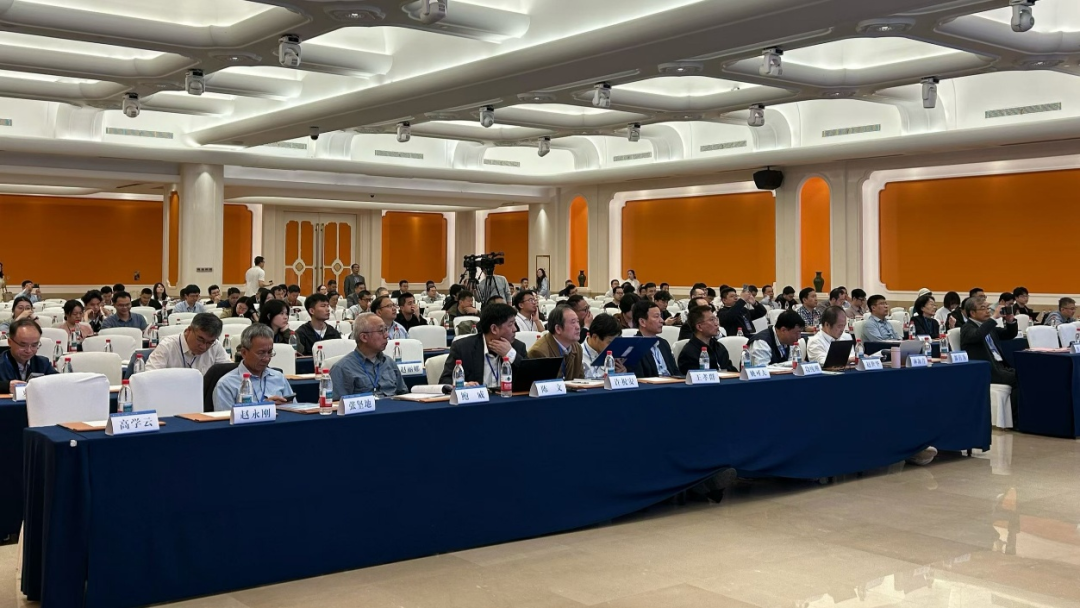
Figure3. Main conference hall
During the plenary session, 13 leading experts shared cutting-edge achievements and practical experiences in magnetic physics, magnetic materials, and advanced technologies. Professor Zhang Huaiwu of the University of Electronic Science and Technology of China introduced recent progress in magnetically integrated materials (permanent magnets, soft magnets, and gyromagnetic materials) and their devices. Professor Zhu Minggang of China Iron & Steel Research Institute Group analyzed the current status and trends of rare-earth permanent magnet materials under export control policies. Professor Jin Changqing of the Institute of Physics, Chinese Academy of Sciences, reviewed three decades of creating magnetoelectric materials under extreme conditions. Professor Duan Chungang of East China Normal University presented theoretical concepts of altermagnetism and altermagons. Professor Zhao Shihua of Fuwai Hospital, Chinese Academy of Medical Sciences, shared a new paradigm of pathological imaging reconstruction for cardiovascular diagnosis and treatment. Professor Che Shenglei of Zhejiang University of Technology introduced the new-generation rare-earth permanent magnet material samarium-iron-nitrogen and its industrial application progress. In addition, Professor Yao Kefu of Tsinghua University, Professor Chen Wen of Shanghai Jiao Tong University, Professor Zhang Chi of Ningbo Institute of Materials Technology and Engineering, Chinese Academy of Sciences, Professor Wang Xiaoqun and Professor Xu Zhu'an of Zhejiang University, Professor Wang Rongming of University of Science and Technology Beijing, and Professor Wang Xiangrong of The Chinese University of Hong Kong (Shenzhen) also delivered outstanding presentations on topics such as high-saturation-inductance nanocrystalline alloys, holographic metasurface information-energy simultaneous transmission, high-performance permanent magnet motors, numerical studies of quantum magnetic systems, anomalous Hall effect and transverse thermoelectric effect in Kagome metals, structural evolution and atomic-level manufacturing of nanomaterials under external fields, and magnetic skyrmion physics.
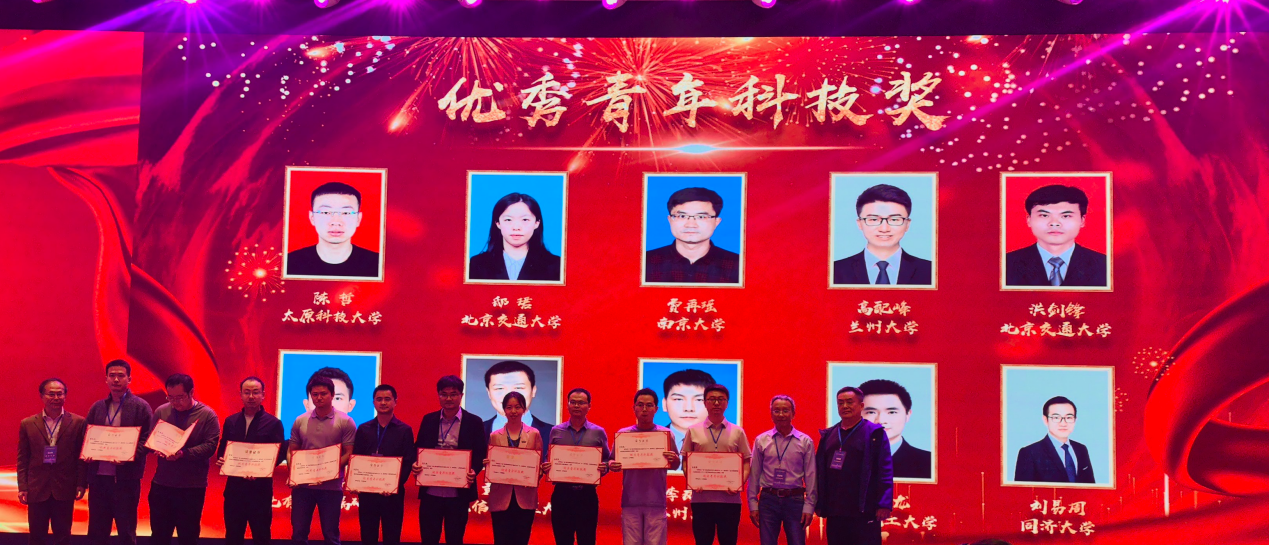
Figure4. Award ceremony
The conference arranged 4 parallel sub-forums, hosting 206 oral presentations and 16 poster presentations, covering fundamental theories, preparation methods, characterization techniques, performance regulation, device design, and industrial applications of magnetic materials. The participating experts engaged in in-depth and productive academic and technical discussions. The conference also selected and awarded outstanding oral presentations and outstanding posters. Dr. Liu Jialong, a young faculty member from the College of Mathematics and Physics of Beijing University of Chemical Technology, was invited to give a sub-forum talk and received the "Outstanding Young Scientist Award."
The successful convening of this conference not only provided a high-level platform for academic exchange and achievement demonstration for researchers in the field of magnetic materials and devices nationwide, but also clearly illustrated the future directions of the field. At the same time, the conference effectively promoted the development of magnetic materials-related research within the College of Mathematics and Physics of Beijing University of Chemical Technology, significantly enhancing the College's academic influence and its capacity for industry-academia-research collaborative innovation.