
On December 3rd, the College of Mathematics and Physics successfully held the seventh session of the "Xishu·Wuli" high-level academic lecture series at the Qiuzhen Lecture Hall on the Changping Campus. Professor Ma Yanqing, a Boya Distinguished Professor from the School of Physics at Peking University, was invited to deliver an academic report titled "The Application of Artificial Intelligence in Physics Discovery". The report was presided by Wang Wei, Dean of the College of Mathematics and Physics, with over 200 faculty members and students from the Changping Campus in attendance.

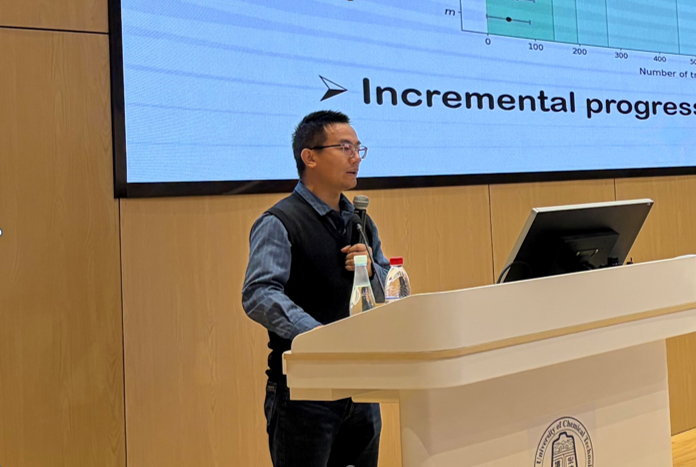
Professor Ma Yanqing's report centered on two core cycles: "from data to models" and "from models to data", providing an in-depth analysis of the cutting-edge advancements and practical applications of artificial intelligence in the field of physics. During the exchange session, Professor Ma engaged in lively discussions with the attending faculty and students on topics related to artificial intelligence and physics research, patiently addressing their questions.
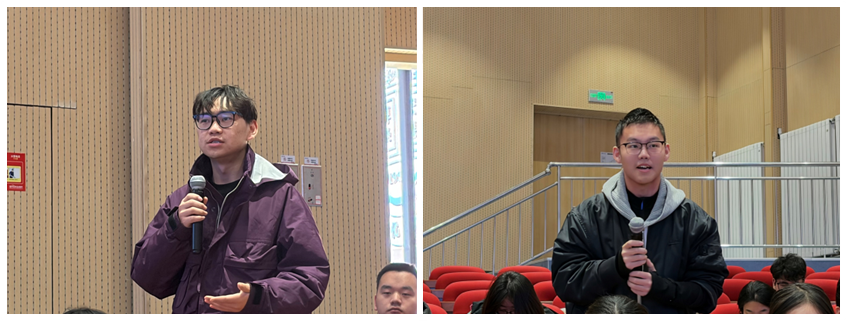
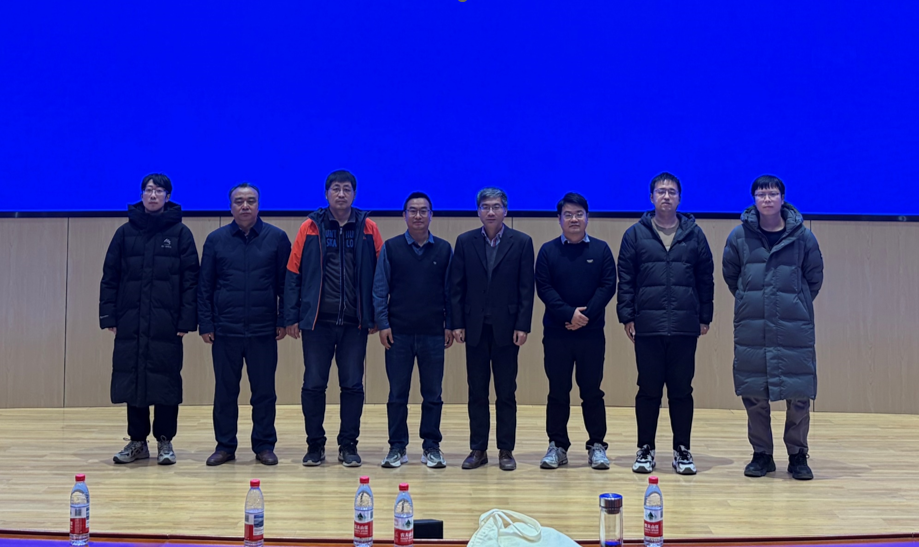
This lecture vividly presented the frontier landscape of deep integration between artificial intelligence and physical sciences, broadening research horizons and cognitive boundaries. The "Xishu·Wuli" lecture series remains committed to building a high-level platform for academic exchange, assisting faculty and students in grasping disciplinary development trends, and enhancing their scientific research literacy and forward-looking capabilities.
【Introduction to the expert】
Song Cheng is a tenured professor at the School of Materials Science and Engineering, Tsinghua University, Vice Dean of Weixian College, and Director of the Key Laboratory of Advanced Materials at the Ministry of Education. His research focuses on functional materials for information technology, including spintronic materials, surface acoustic wave filters, and magneto-acoustic coupling devices. He has authored the monograph "Spintronic Materials and Devices" and published over 300 academic papers in journals such as Nature and Nature Materials, which have been cited approximately 18,000 times. In 2022, he was awarded the National Science Fund for Distinguished Young Scholars. His accolades include the Second Prize of the State Natural Science Award (as the third contributor), the First Prize of the Natural Science Award from the Ministry of Education (as the first contributor), the Exploration Award, and the National "First Outstanding Young Graduate Supervisor" Award. He also serves as a standing council member of the Chinese Materials Research Society and director of the Youth Committee, as well as a council member of the Chinese Vacuum Society and director of the Thin Film Committee.